Introduction
Cloud computing has transformed the way organizations build, manage, and scale their digital operations. From startups to global enterprises, businesses rely on cloud technologies to improve efficiency, reduce infrastructure costs, and accelerate innovation. This droven.io cloud computing guide explores the fundamentals of cloud computing, its service models, deployment options, benefits, challenges, and the role it plays in modern business transformation.
Whether you’re an IT professional, business owner, or someone exploring digital technologies, understanding cloud computing can help you make informed technology decisions. Along the way, we’ll also examine how droven.io enterprise tech innovation and droven.io IT services in USA contribute to helping organizations embrace modern cloud solutions.
What Is Cloud Computing?
Cloud computing is the delivery of computing services such as servers, storage, networking, databases, software, analytics, and artificial intelligence over the internet. Instead of investing in expensive on-premises infrastructure, businesses can access these resources on demand and pay only for what they use.
Cloud technology enables companies to deploy applications faster, store data securely, collaborate remotely, and scale operations without purchasing additional hardware.
Some of the most common cloud services include:
- Virtual servers
- Cloud storage
- Database hosting
- Software applications
- Data analytics
- Machine learning services
- Backup and disaster recovery
Why Cloud Computing Matters Today
Businesses face increasing demands for flexibility, security, and digital transformation. Traditional IT infrastructure often requires significant investment and ongoing maintenance, while cloud platforms provide scalable resources that grow alongside business needs.
Key reasons organizations adopt cloud computing include:
- Reduced operational costs
- Faster application deployment
- Improved collaboration
- Enhanced data security
- Automatic software updates
- Business continuity planning
- Global accessibility
Cloud computing also allows businesses to experiment with new technologies without making long-term infrastructure commitments.
Cloud Service Models Explained
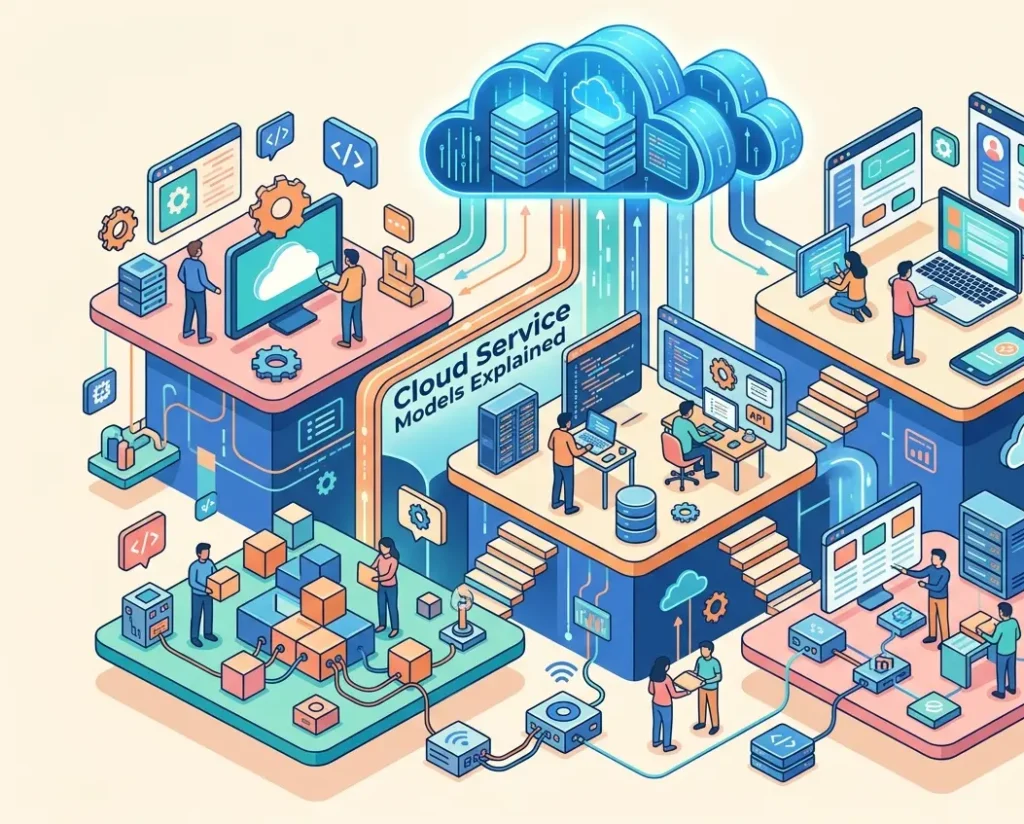
Understanding the different cloud service models is essential for selecting the right solution.
Infrastructure as a Service (IaaS)
IaaS provides virtualized computing resources over the internet. Businesses can rent servers, storage, and networking while maintaining control over operating systems and applications.
Suitable for:
- Large-scale hosting
- Development environments
- Disaster recovery
- Custom infrastructure
Platform as a Service (PaaS)
PaaS offers a complete development environment where developers can build, test, and deploy applications without managing underlying hardware.
Benefits include:
- Faster development
- Built-in development tools
- Simplified deployment
- Automatic updates
Software as a Service (SaaS)
SaaS delivers software applications directly through a web browser. Users simply log in and begin using the application without installation or maintenance.
Examples include:
- Customer relationship management software
- Email platforms
- Collaboration tools
- Project management applications
Cloud Deployment Models
Choosing the right deployment model depends on business goals, compliance requirements, and budget.
Public Cloud
Public cloud services are operated by third-party providers and shared among multiple customers.
Advantages:
- Lower costs
- Easy scalability
- Minimal maintenance
- Quick deployment
Private Cloud
Private clouds are dedicated to a single organization, providing greater control and customization.
Ideal for:
- Government agencies
- Financial institutions
- Healthcare organizations
- Large enterprises
Hybrid Cloud
Hybrid cloud combines public and private environments, allowing businesses to move workloads where they perform best.
Benefits include:
- Greater flexibility
- Improved disaster recovery
- Better workload distribution
- Enhanced security
Multi-Cloud
Multi-cloud strategies involve using multiple cloud providers to improve reliability, reduce vendor dependency, and optimize performance.
Key Benefits of Cloud Computing
Businesses continue adopting cloud technologies because of the significant advantages they offer.
Scalability
Organizations can increase or decrease computing resources based on demand without purchasing additional hardware.
Cost Efficiency
Cloud platforms eliminate large upfront investments while reducing maintenance expenses.
Remote Accessibility
Employees can securely access systems and applications from virtually anywhere.
Improved Security
Modern cloud providers implement advanced security measures including:
- Data encryption
- Identity management
- Multi-factor authentication
- Continuous monitoring
- Compliance certifications
Business Continuity
Cloud-based backups and disaster recovery solutions help businesses recover quickly after unexpected disruptions.
Common Cloud Computing Challenges
Although cloud computing provides many advantages, businesses should also understand potential challenges.
Some common concerns include:
- Data privacy regulations
- Vendor lock-in
- Internet dependency
- Cost management
- Migration complexity
- Security misconfigurations
Proper planning and governance significantly reduce these risks.
The Role of Droven.io Enterprise Tech Innovation
Technology continues evolving rapidly, and organizations need reliable strategies to remain competitive. Droven.io enterprise tech innovation focuses on helping businesses understand emerging technologies and digital transformation practices.
Enterprise technology innovation often includes:
- Cloud adoption strategies
- Artificial intelligence integration
- Digital infrastructure modernization
- Automation solutions
- Cybersecurity improvements
- Data-driven decision making
By embracing innovation, businesses can improve operational efficiency while preparing for future technological advancements.
Understanding Droven.io IT Services in USA
Modern businesses require dependable IT support to maintain secure and efficient operations. Droven.io IT services in USA highlight the importance of professional technology solutions that support organizations across multiple industries.
Common IT services include:
- Cloud consulting
- Infrastructure management
- Network security
- Data backup
- System monitoring
- IT strategy development
- Technical support
- Cloud migration planning
These services help organizations optimize technology investments while reducing operational risks.
Cloud Migration Best Practices
Moving workloads to the cloud requires careful planning to avoid unnecessary downtime.
A successful migration typically follows these steps:
- Assess existing infrastructure.
- Identify business objectives.
- Choose the appropriate cloud platform.
- Develop a migration roadmap.
- Test workloads before deployment.
- Monitor performance after migration.
- Optimize resources continuously.
Proper planning minimizes disruption and improves long-term success.
Cloud Security Best Practices
Security remains one of the most important aspects of cloud computing.
Organizations should implement:
- Strong password policies
- Multi-factor authentication
- Role-based access control
- Data encryption
- Regular security audits
- Automated backups
- Continuous vulnerability monitoring
- Employee cybersecurity training
Combining technical controls with employee awareness significantly reduces security risks.
Cloud Computing and Artificial Intelligence
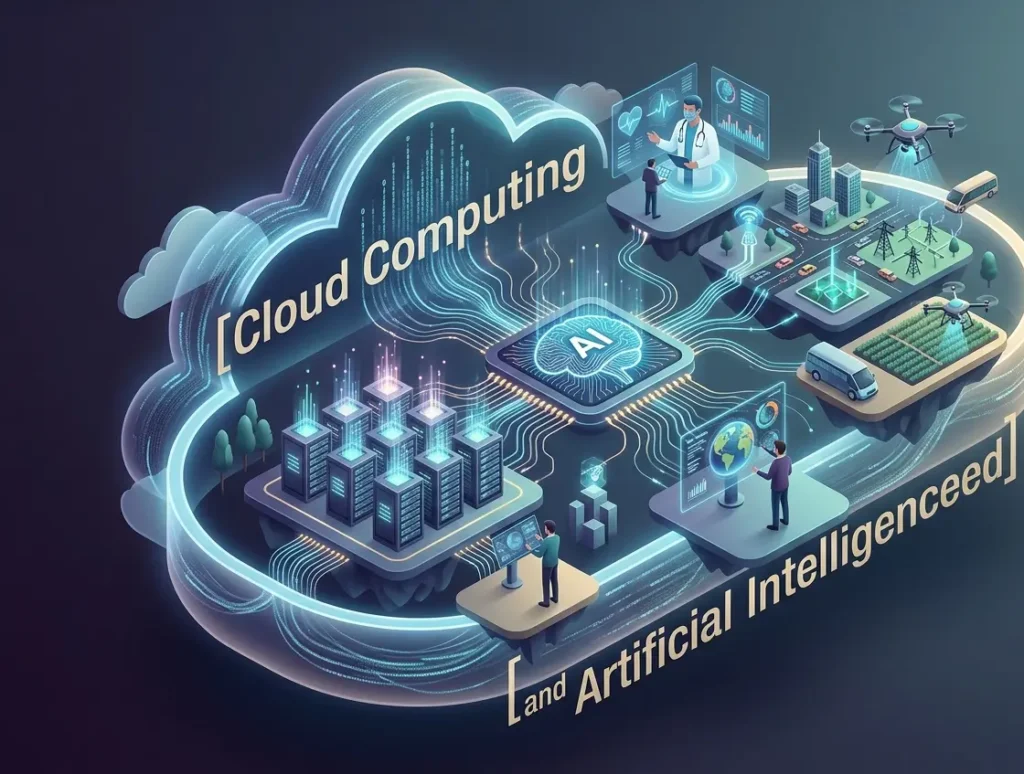
Artificial intelligence and cloud computing complement each other. Cloud platforms provide the computing power needed to train machine learning models while making AI services more accessible.
Businesses now use cloud-based AI for:
- Customer support chatbots
- Predictive analytics
- Image recognition
- Fraud detection
- Marketing automation
- Natural language processing
The combination of AI and cloud technologies continues driving digital transformation across industries.
Future Trends in Cloud Computing
Cloud computing continues evolving with emerging technologies shaping its future.
Important trends include:
- Edge computing
- Serverless computing
- AI-powered cloud management
- Sustainable cloud infrastructure
- Zero Trust security models
- Industry-specific cloud platforms
- Cloud-native application development
- Increased automation
Organizations that stay informed about these trends will be better prepared for future technological changes.
Cloud Computing Comparison
| Feature | Traditional IT Infrastructure | Cloud Computing |
|---|---|---|
| Initial Cost | High | Low |
| Scalability | Limited | Highly Flexible |
| Maintenance | Organization Managed | Provider Managed |
| Deployment Speed | Slow | Fast |
| Remote Access | Limited | Available Anywhere |
| Automatic Updates | Rare | Regular |
| Disaster Recovery | Expensive | Built-In Options |
| Resource Expansion | Hardware Required | Instant Scaling |
Tips for Choosing the Right Cloud Solution
Selecting the right cloud environment depends on your organization’s unique requirements.
Consider the following factors:
- Business size
- Budget
- Security requirements
- Compliance needs
- Performance expectations
- Existing infrastructure
- Technical expertise
- Future growth plans
Evaluating these factors helps businesses choose solutions that align with long-term objectives.
Frequently Asked Questions
What is the purpose of this droven.io cloud computing guide?
This guide explains cloud computing concepts, service models, deployment options, benefits, security practices, and modern business applications to help readers understand today’s cloud technologies.
What are the three main cloud service models?
The three primary service models are Infrastructure as a Service (IaaS), Platform as a Service (PaaS), and Software as a Service (SaaS).
Why is cloud computing important for businesses?
Cloud computing improves flexibility, reduces operational costs, increases scalability, enhances collaboration, and supports business continuity.
How does droven.io enterprise tech innovation support businesses?
It focuses on helping organizations understand digital transformation, cloud technologies, automation, cybersecurity, and emerging enterprise solutions.
What services are commonly included in droven.io IT services in USA?
Typical services include cloud consulting, infrastructure management, cybersecurity, technical support, cloud migration, system monitoring, and IT strategy planning.
Is cloud computing secure?
Yes. Modern cloud providers implement advanced security measures, but organizations must also follow best practices such as encryption, multi-factor authentication, regular audits, and employee training.
Conclusion
Cloud computing has become a foundation of modern digital business, enabling organizations to innovate faster, reduce infrastructure costs, and remain competitive in an increasingly connected world. This droven.io cloud computing guide demonstrates how cloud technologies support businesses of all sizes through scalable infrastructure, flexible service models, and enhanced security capabilities. Combined with insights into droven.io enterprise tech innovation and droven.io IT services in USA, organizations can better understand how cloud adoption contributes to long-term digital success. By embracing modern cloud strategies, following security best practices, and planning for future technological advancements, businesses can build resilient, efficient, and future-ready IT environments.